Most fans describe the powerplay as "the overs when boundaries come easily". That is a symptom, not the rule. The actual law has nothing to do with batting at all. It limits where the fielding side is allowed to stand, and everything else, the rush of early boundaries, the sudden caution once it ends, follows from that one restriction.
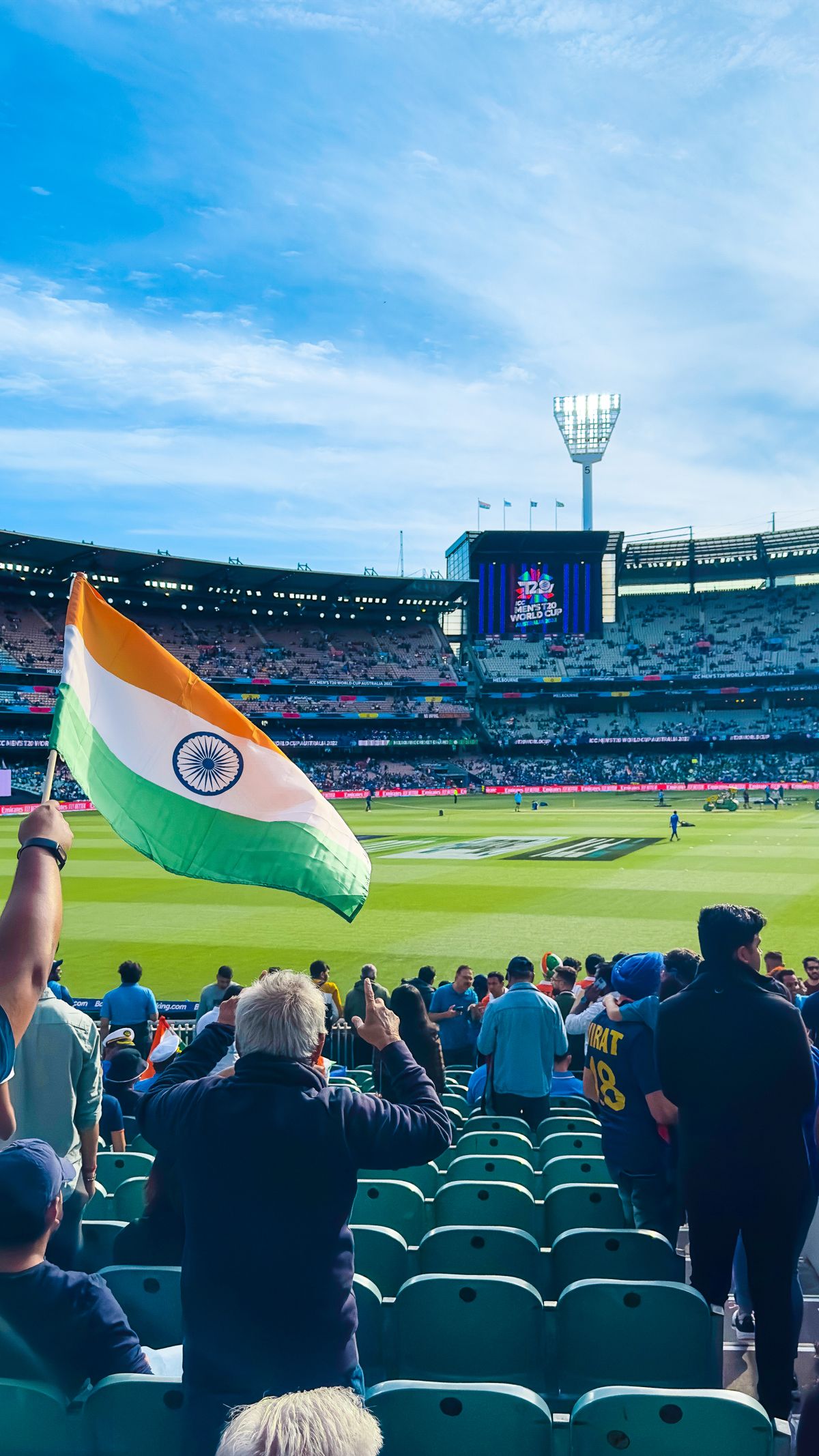
Photo via Pexels
By the end of this piece you will know exactly how many fielders can stand where during a powerplay in both T20 and ODI cricket, why the rule exists at all, and what changed for shortened T20 matches from July 2026.
What a powerplay actually is
Cricket grounds have an inner boundary called the 30 yard circle, marked out around the pitch. A powerplay is simply a block of overs in which the fielding captain is told how many players can stand outside that circle. Fewer fielders on the boundary means more gaps in the outfield, so a shot that would normally be caught on the rope in over thirty might race away for four in over three. Nothing about the shot changes. The infield and outfield either side of that circle are what the rule actually governs.
How the T20 powerplay works
The first six overs
In a T20 international, the powerplay covers the first six overs of an innings. During those overs, only two fielders are allowed outside the 30 yard circle. The fielding side must also keep at least two fielders in close catching positions within 15 yards of the batter on the off side. If the fielding team breaks either rule at the moment the ball is bowled, the square leg umpire calls a no-ball and the batting side gets a free hit next delivery.
After the powerplay
From over seven onwards, the fielding captain can send up to five players outside the circle. That single change reshapes the whole innings. Boundary riders appear at deep cover and long on. Batters who were free-swinging in the powerplay often have to manufacture width instead, or risk being caught in the deep.
How the fielding circle opens up once the powerplay ends.
How the ODI powerplay works
One Day Internationals split the innings into three separate powerplay phases rather than one. Overs 1 to 10 allow only two fielders outside the circle, the same restriction as T20. From overs 11 to 40, that limit rises to four. In the last ten overs, 41 to 50, the fielding side can post five fielders on the boundary.
This three phase system replaced an older and messier rule. Before July 2015, ODIs also had a separate "batting powerplay", a five over block that the batting side could choose to take at any point between overs 15 and 40, usually saved for a late assault. The ICC scrapped it after the 2015 World Cup, where batters had dominated so heavily that the balance of the format looked broken. Removing the batting powerplay and allowing a fifth fielder out in the closing overs gave bowlers something back.
| Overs | Fielders allowed outside the circle | |
|---|---|---|
| T20I powerplay | 1 to 6 | Max 2 (plus 2 catchers within 15 yards) |
| T20I after powerplay | 7 to 20 | Max 5 |
| ODI powerplay 1 | 1 to 10 | Max 2 |
| ODI powerplay 2 | 11 to 40 | Max 4 |
| ODI powerplay 3 | 41 to 50 | Max 5 |
Why the restriction changes how teams play
A captain who wins the toss and decides to bowl first is betting that fresh bowlers and a new ball will do more damage inside a two fielder powerplay than they would later. That single decision, made minutes after the toss, sets the tone for the whole powerplay battle. Openers, in turn, know exactly how many overs they have before the boundary riders arrive, and the best ones treat the powerplay as a separate contest inside the match. Scoring quickly while the field is open changes the run rate for the rest of the innings, which is why teams that fall behind the rate in the powerplay so often stay behind it until the last few overs.
The rule that changed in July 2026
Until this year, a rain shortened T20 international rounded the powerplay off to the nearest whole over. In a match cut to eight overs a side, for example, the powerplay might have run for a full two overs when the proportionate length was closer to 2.2. From 2 July 2026, the ICC changed the method to round to the nearest ball instead. Using that same eight over example, the powerplay now ends after the second ball of the third over, at which point three more fielders can drop back from inside the circle. The system had already been used for years in England's T20 Blast without any trouble for players or umpires, and the ICC Men's Cricket Committee adopted it as the preferred method for international cricket.
Read next
- How to chase a target in cricket, because a powerplay strategy only makes sense alongside the required run rate a team is chasing.
- Role of a captain in cricket, for how field settings during the powerplay reveal a captain's tactical thinking better than almost any other phase.
- Run rate versus required run rate explained, to see exactly how those early overs change the maths for the rest of the innings.
Frequently asked questions
Can a captain choose not to use the powerplay fielding restrictions?
No. The powerplay is mandatory in both formats. A captain cannot defer it or decline to use it, and umpires enforce the fielder count on every delivery.
What happens if a team breaks the powerplay fielding rule?
The umpire calls a no-ball the moment an illegal field is set, and the batting side is awarded a free hit on the following delivery, on top of the extra run for the no-ball itself.
Does Test cricket have a powerplay?
No. Test matches have no fielding restrictions of this kind. Captains can place as many fielders on the boundary as they like from the first over, which is one of the clearest differences between red ball and white ball cricket.
Why did ODIs remove the batting powerplay?
The ICC withdrew it for series starting on or after 5 July 2015, after the preceding World Cup produced record scoring and left bowlers with too little protection. Giving the fifth boundary rider back in the last ten overs was the trade-off.
Next time you watch the first over of a T20 innings, count the fielders standing outside the circle before the bowler even reaches the crease. There should be exactly two. Watch how that number changes the moment over seven begins, and the whole shape of the innings will make a lot more sense.
No comments:
Post a Comment