What Is Fall of Wickets in Cricket? (Explained Simply for Beginners)


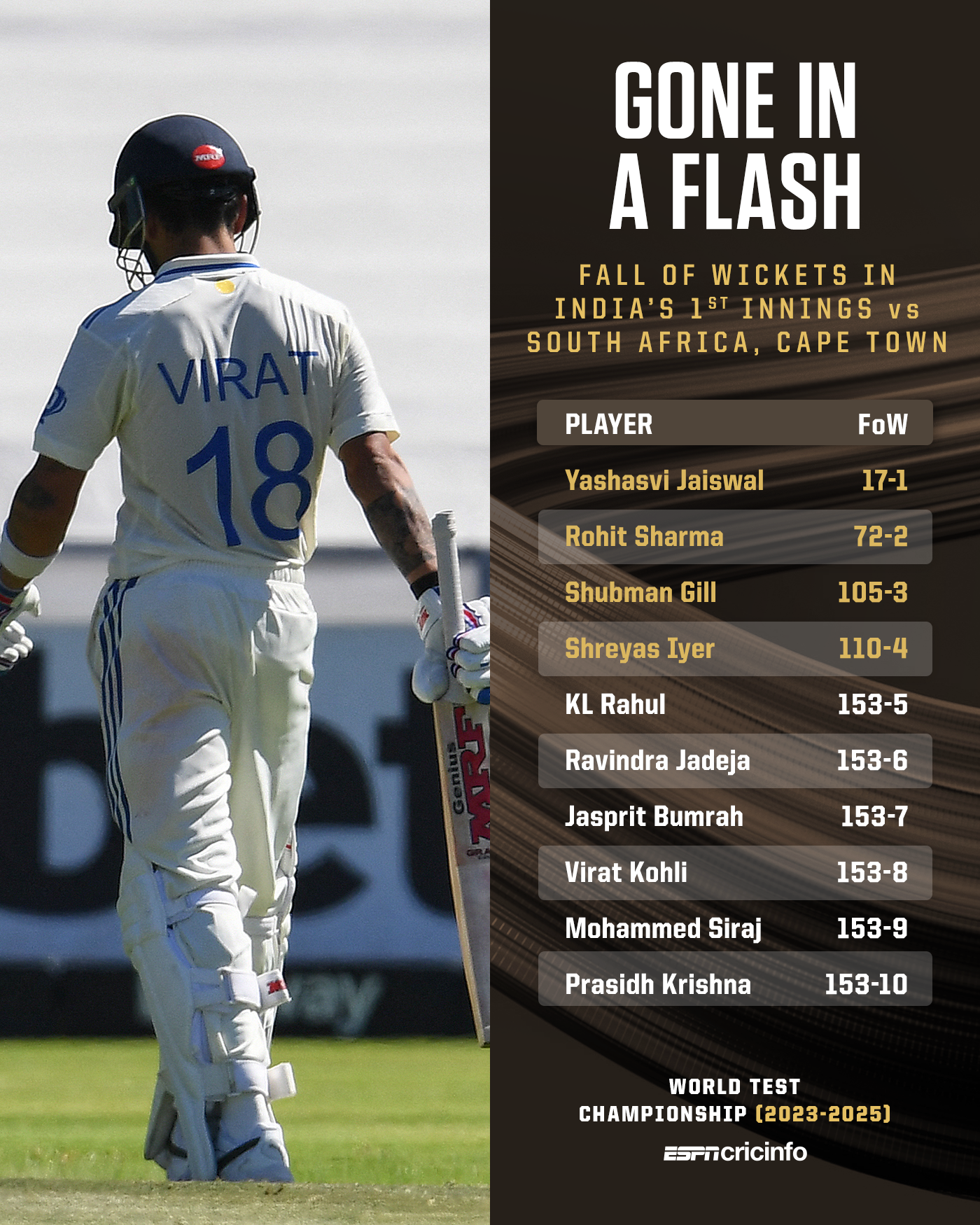
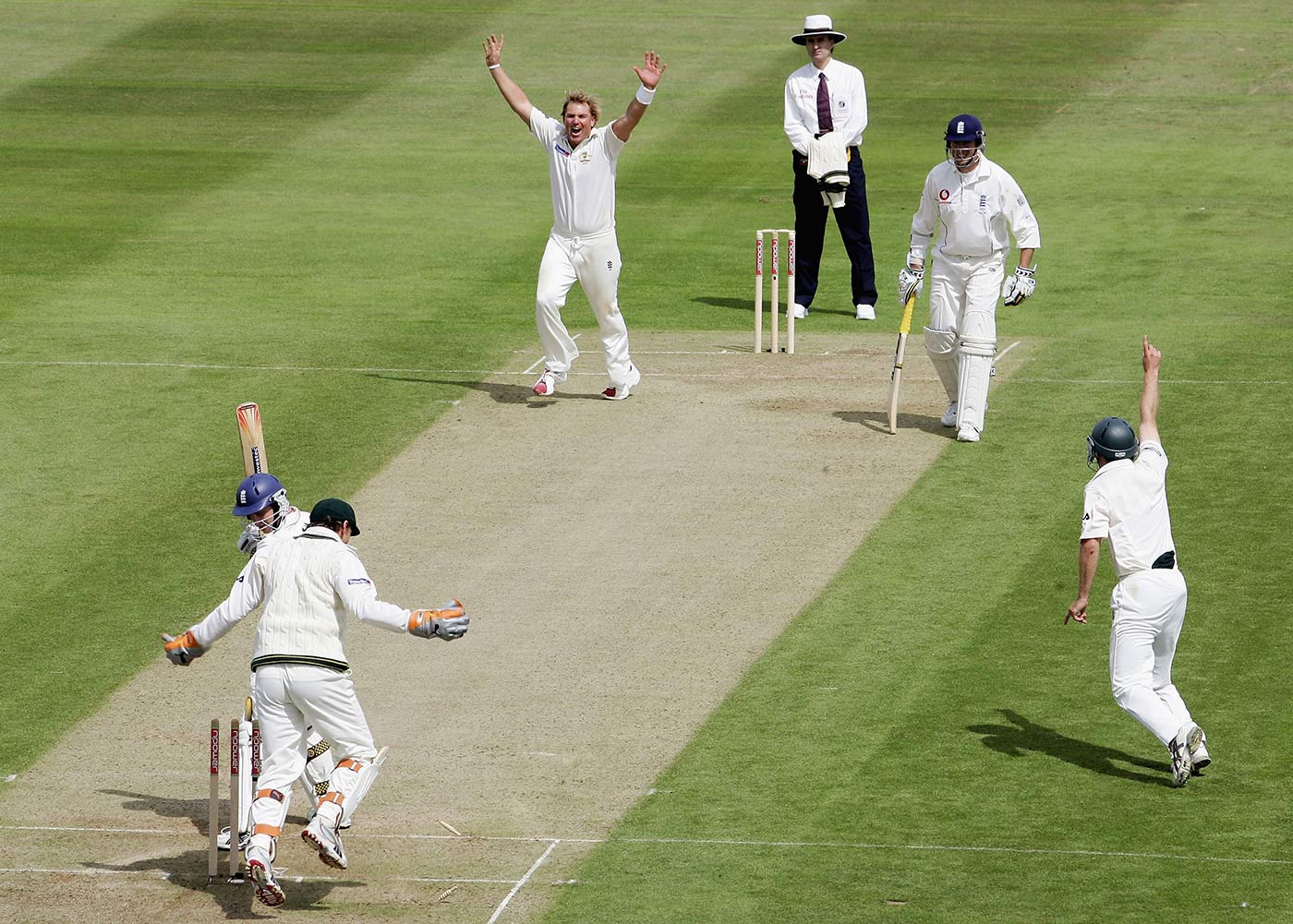
If you check a cricket scorecard, you’ll often see a section called “Fall of Wickets” with numbers like:
1–45, 2–78, 3–110
For beginners, this can look confusing.
Questions like:
What does fall of wickets mean?
Why are numbers written like this?
How does it help understand the match?
Don’t worry.
In this article, you’ll learn what fall of wickets means in cricket, how to read it correctly, and why it’s important, explained in simple, beginner-friendly language.
What Is Fall of Wickets in Cricket?
Fall of wickets shows:
The score of the team when each wicket falls during an innings.
It tells us:
When a batsman got out
At what team score the wicket fell
The order in which wickets fell
Simply put, it shows how the innings progressed.
Simple Definition (Beginner Version)
✔ “Fall of wickets” = When and at what score each batsman got out
It helps fans understand:
Whether wickets fell early or late
How stable or unstable the batting was
How Fall of Wickets Is Written
Fall of wickets is written in this format:
Wicket number – Team score
Example:
1–45
This means:
First wicket fell
When the team score was 45 runs
Full Example Explained
Let’s look at this example:
Fall of wickets: 1–45, 2–78, 3–110, 4–135
This means:
1st wicket fell at 45 runs
2nd wicket fell at 78 runs
3rd wicket fell at 110 runs
4th wicket fell at 135 runs
So, by the time 4 wickets had fallen, the team had scored 135 runs.
Why Is Fall of Wickets Important?
Fall of wickets helps us understand:
✔ Batting stability
Early wickets = pressure
Late wickets = strong batting
✔ Match momentum
Quick wickets can change the game
Long partnerships slow down bowling attacks
✔ Partnerships
You can see how many runs were added between wickets.
Fall of Wickets and Partnerships (Connected Concept)
Example:
1–20
2–120
This means:
First wicket fell early at 20
Second wicket fell at 120
👉 This shows a 100-run partnership, which is very important.
To understand this better, read:
👉 What Is Partnership in Cricket?
Where Do You Find Fall of Wickets in a Scorecard?
In a cricket scorecard, fall of wickets usually appears:
Below the batting table
Above bowling figures
To learn full scorecard reading, read:
👉 How to Read a Cricket Scorecard (Beginner’s Guide)
Fall of Wickets vs Batting Order
Important beginner point:
Batting order shows who batted
Fall of wickets shows when they got out
These are related but not the same.
Example From a T20 Match
Imagine this T20 score:
Team score: 180/6
Fall of wickets: 1–10, 2–25, 3–50, 4–120, 5–150, 6–170
This tells us:
Early collapse (3 wickets at 50)
Strong middle-order recovery
Some wickets near the end
So the batting had ups and downs.
Does “Not Out” Affect Fall of Wickets?
Yes.
Players who are not out will not appear in fall of wickets
Only dismissed batsmen are included
This is normal.
Fall of Wickets in Test vs Limited-Overs Cricket
In Test Cricket
Focus on long partnerships
Early wickets are very important
In ODI & T20
Quick scoring matters
Fall of wickets shows pressure moments
Understanding this helps you enjoy all formats.
Common Beginner Mistakes About Fall of Wickets
❌ Thinking it shows overs
❌ Thinking it shows runs by a batsman
❌ Confusing it with bowling figures
❌ Ignoring it completely
Once you understand it, fall of wickets becomes very useful.
Fall of Wickets vs Bowling Figures
| Fall of Wickets | Bowling Figures |
|---|---|
| Shows team score at dismissals | Shows bowler performance |
| Focuses on batting collapse/recovery | Focuses on overs, runs, wickets |
| Helps analyze match flow | Helps judge bowlers |
To understand bowling figures, read:
👉 What Does 4-0-22-1 Mean in Bowling Figures?
How Fall of Wickets Helps Commentators
Commentators use fall of wickets to:
Explain turning points
Highlight partnerships
Describe pressure situations
That’s why you hear it often during matches.
FAQs About Fall of Wickets
❓ Is fall of wickets important for beginners?
Yes. It’s one of the best ways to understand how a match changed.
❓ Does fall of wickets include retired hurt?
No. Only dismissed batsmen are counted.
❓ Can fall of wickets decide Man of the Match?
Indirectly, yes — it helps show impact performances.
No comments:
Post a Comment