What Is Required Run Rate (RRR) in Cricket? (Explained Simply for Beginners)

While watching a cricket match, you may hear commentators say:
👉 “The required run rate is going up.”
But what does Required Run Rate (RRR) actually mean?
Why does it keep changing during a chase?
In this article, you’ll learn what required run rate is, how to calculate it, and why it is important, explained in very easy words for beginners.
If you are new to cricket, first read Cricket Rules Explained Simply for Beginners to understand the basics.
What Is Required Run Rate in Cricket? (Simple Meaning)
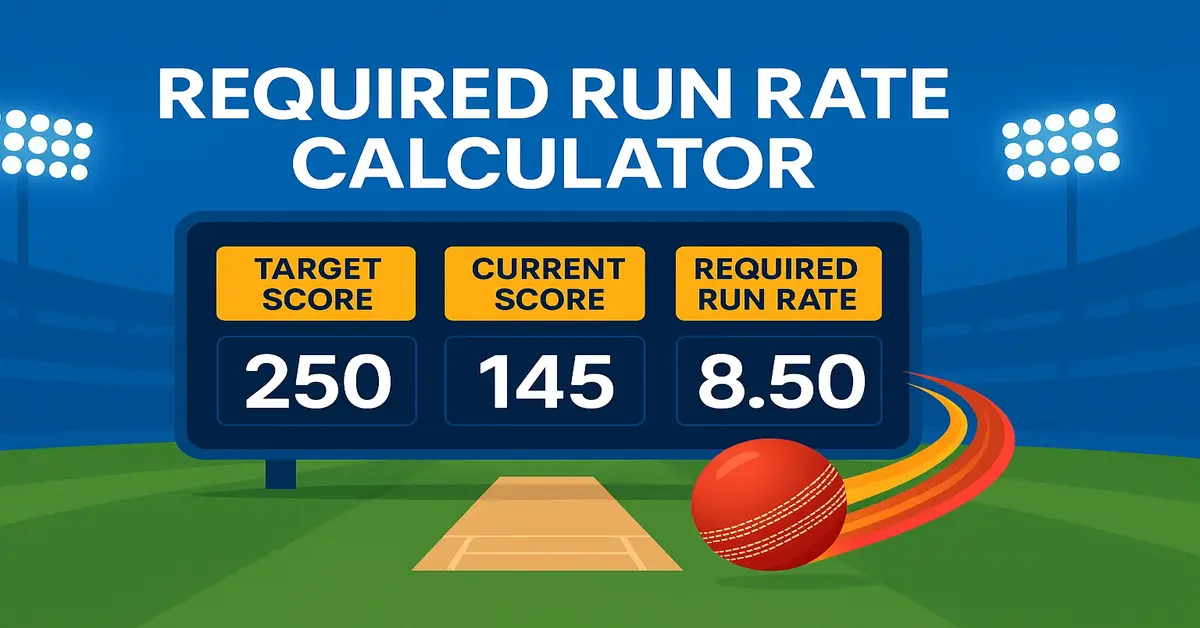
Required Run Rate (RRR) means:
How many runs a team must score per over to win the match
It is used only during a run chase.
👉 RRR tells the batting team how fast they need to score to reach the target.
Required Run Rate Formula (Easy)
Formula:
Required Run Rate = Runs Needed ÷ Overs Remaining
Required Run Rate Example (Very Simple)
Example 1:
Target: 250
Runs scored: 150
Overs remaining: 20
Runs needed:
250 − 150 = 100
Now calculate RRR:
100 ÷ 20 = 5.00
👉 Required Run Rate = 5 runs per over
👉 This is comfortable
Example 2:
Runs needed: 60
Overs remaining: 5
60 ÷ 5 = 12.00
👉 Required Run Rate = 12 runs per over
👉 This is very difficult, especially in ODI cricket.
What Is a Good Required Run Rate?
It depends on the format of cricket.
| Format | Comfortable RRR |
|---|---|
| ODI Cricket | Below 6 |
| T20 Cricket | Below 8 |
| Last 5 overs | Even 10+ is common |
👉 As overs reduce, RRR usually increases.
Required Run Rate vs Current Run Rate (Common Confusion)
Many beginners confuse these two.
| Required Run Rate | Current Run Rate |
|---|---|
| Needed to win | Scored so far |
| Future-based | Past-based |
| Used in chases | Used anytime |
| Changes quickly | Changes slowly |
Understanding both helps you follow matches better.
Why Required Run Rate Keeps Changing
RRR changes because:
Overs reduce
Runs required change
Boundaries increase scoring
Dot balls increase pressure
One big over can lower RRR quickly.
Required Run Rate in Rain-Affected Matches
In rain-affected matches:
Overs are reduced
Targets are revised
RRR can increase suddenly
(This is handled using the Duckworth–Lewis–Stern method, which you’ve already covered.)
Why Required Run Rate Is Important
RRR helps:
Batsmen plan shots
Captains set strategies
Fans understand match pressure
Commentators explain match situation
Without RRR, chasing matches would be confusing.
Why Required Run Rate Confuses Beginners
Beginners get confused because:
It changes every over
One wicket can affect strategy
Pressure situations increase mistakes
Once you follow overs and runs, RRR becomes easy.
Final Summary (Beginner Friendly)
Remember:
RRR = runs needed per over
Used only while chasing
Depends on overs remaining
Lower RRR = easier chase
Very important in limited-overs cricket
Understanding required run rate makes watching chases more exciting.
Frequently Asked Questions
Is RRR used in Test cricket?
No, only in limited-overs matches.
Can RRR go down suddenly?
Yes, after boundaries or big overs.
Is high RRR always impossible?
No, but it requires aggressive batting.
Beginner Question 👇
Do you enjoy high-pressure run chases with a rising required run rate?
No comments:
Post a Comment