Andy Lloyd had faced ten balls in his first Test innings when Malcolm Marshall dropped one short at Edgbaston in June 1984. It struck the temple guard of his helmet, he collapsed on the pitch, and he spent the next ten days in hospital with blurred vision. Lloyd never played for England again. That single ball shows exactly what a bouncer is built to do: climb into space a batter cannot easily control.
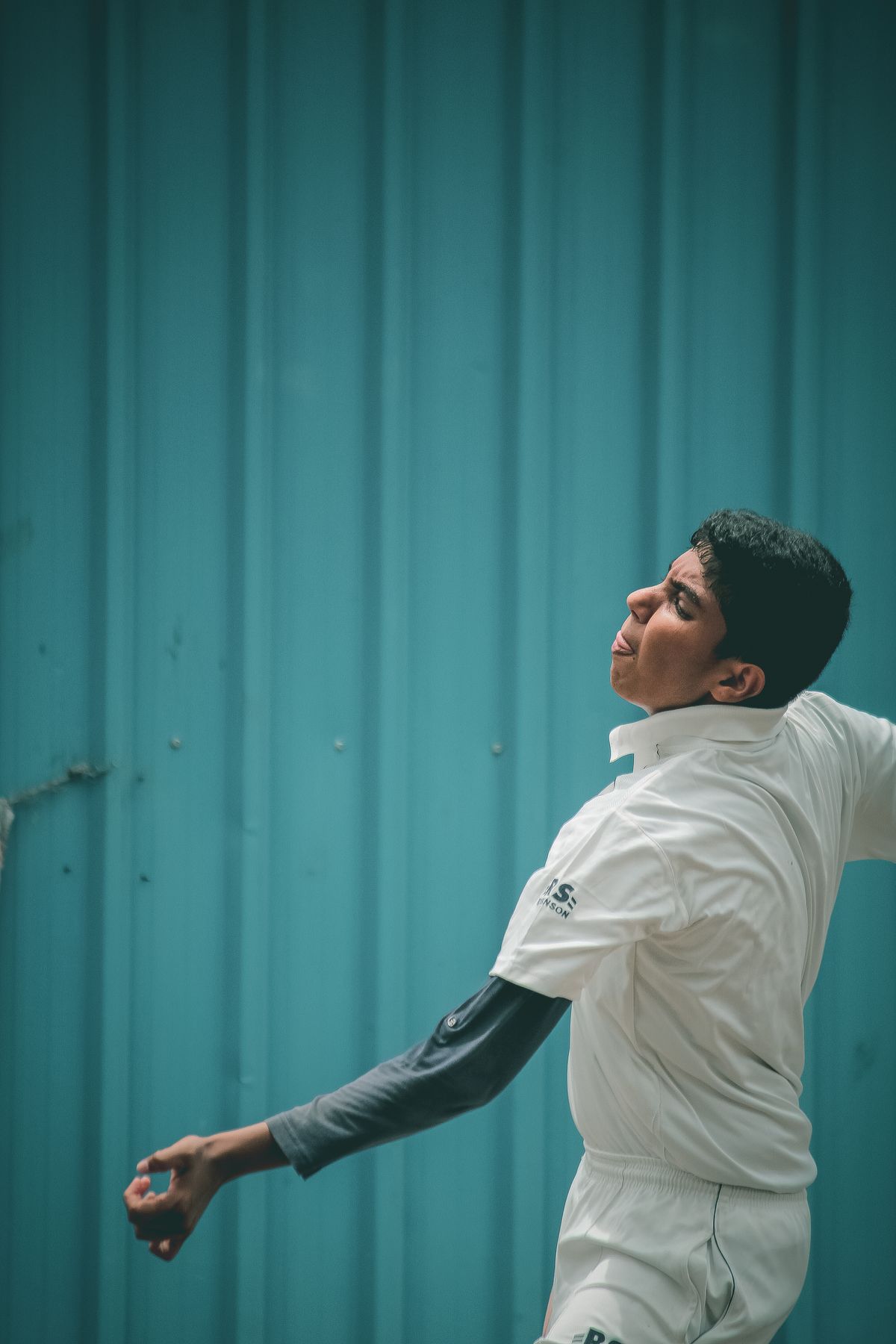
Photo via Pexels
By the end of this article you will know what actually separates a bouncer from a normal delivery, the Law that governs how many a bowler can send down, why the tactic exists at all, and where it has gone badly wrong.
What makes a delivery a bouncer
A bouncer is a short-pitched delivery, bowled deliberately fast and full of intent, that lands much closer to the bowler than a normal length ball and rises steeply towards the batter's upper body or head. Under the playing conditions used in international cricket, a delivery only counts as a fast short-pitched ball, for the purposes of the over limit, once it passes or would have passed above the shoulder of the batter standing upright at the crease. Anything lower is just a short ball, not a bouncer in the regulatory sense, even if it still hurries the batter.
The bounce is the whole point. A bowler pitches the ball a good six to eight metres closer to themselves than a normal length delivery, so it still has most of its downward energy left when it reaches the batter and shoots upward instead of settling into a comfortable driving or defensive height. That is a very different challenge from a yorker, which is aimed at the batter's feet rather than their head.
A good length ball bounces close to the batter and arrives around waist to chest height. A bouncer pitches much shorter and is still rising when it reaches the batter, which is why it can climb to shoulder or head height.
The Law that keeps it fair
The Marylebone Cricket Club, which still writes and owns the Laws of the game, covers this under Law 41.6, Bowling of dangerous and unfair short-pitched deliveries. The umpire at the bowler's end must judge whether a short-pitched ball is dangerous, weighing its speed, height, direction and the skill of the batter facing it, and protective equipment is specifically ignored in that judgement. A first offence earns the bowler a warning that lasts the whole innings. A second earns an immediate suspension from bowling for the rest of that innings.
Law 41.7 covers a separate and stricter case: a ball that would pass above waist height without even pitching first, known as a beamer. A beamer is called unfair outright, with no need for the umpire to weigh danger at all, and a deliberate one ends the bowler's innings on the spot. The distinction matters because a bouncer earns its height by pitching short and climbing, while a beamer arrives high because it was never going to bounce in front of the batter at all.
How many bouncers are allowed
Beyond the danger judgement, the format playing conditions add a hard numerical cap, defined using shoulder height rather than an umpire's opinion.
| Limit | What happens if exceeded | |
|---|---|---|
| Test cricket | 2 per over | Third one in the over is called a no-ball |
| One-day internationals | 2 per over | Third one in the over is called a no-ball |
| T20 internationals | 1 per over | Second one in the over is called a no-ball |
The ODI limit has moved more than once. One bouncer per over was introduced in 1991, two were allowed from 1994, the rule tightened back to one in 2001, and the International Cricket Council settled on two per over again from October 2012, the setting still used today. T20 cricket has stayed at one, reflecting the shorter, higher-scoring nature of the format and giving bowlers less room to intimidate.
Why bowlers use the ball at all
Unsettling a set batter
A batter who has been driving confidently on the front foot has their weight and rhythm built around anticipating a length ball. A bouncer forces a late decision, duck, sway, or go for the hook, and even ducking under one costs concentration and unsettles the timing that made the drives work in the first place.
Bodyline and its legacy
The most extreme use of the short ball in Test history came during England's 1932 to 1933 tour of Australia. Captain Douglas Jardine had Harold Larwood and Bill Voce bowl fast, straight and short at the batter's body, with most of the fielders packed on the leg side waiting for a defensive shot to catch. Wicketkeeper Bert Oldfield suffered a fractured skull, and England won the series 4-1 largely by containing Don Bradman. The tactic, known as Bodyline, caused a diplomatic row between England and Australia and led directly to Law changes limiting leg-side fielders and giving umpires clearer power over dangerous bowling, the root of the rule described above.
Pace alone can do similar work without a packed leg side. Jeff Thomson, bowling alongside Dennis Lillee for Australia through the mid-1970s, was clocked at over 160 kilometres per hour and, in the words of fellow paceman Keith Miller, frightened batters from 200 yards away just watching. Malcolm Marshall, who ended Lloyd's Test career in 1984, remains one of the bowlers most associated with a bouncer that batters could not simply leave alone.
When it goes wrong
The Law exists because a bouncer can genuinely hurt someone, and cricket has not always got the balance right. On 25 November 2014, Phillip Hughes was struck on the side of the neck, just below the helmet, by a short ball from Sean Abbott in a Sheffield Shield match at the Sydney Cricket Ground. He died two days later, at the age of 25. The injury was in a small area the helmets of the time did not cover. Cricket Australia and the England and Wales Cricket Board both moved to make helmets compulsory against fast and medium pace bowling within a year, manufacturers added stem guards to protect the back of the neck, and the ICC introduced a concussion substitute rule allowing a batter to be replaced like for like after a head injury. Every neck guard visible on a helmet today traces back to that one ball.
Read next
Frequently asked questions
How many bouncers are allowed in an over?
Two per over in Test cricket and one-day internationals, and one per over in T20 internationals. Going beyond the limit means the umpire calls a no-ball.
What is the difference between a bouncer and a beamer?
A bouncer pitches short and climbs towards the batter as it arrives. A beamer never pitches at all and reaches the batter above waist height on the full, which is judged unfair regardless of the bowler's intent behind it.
Can a batter be given out to a bouncer?
Yes. Caught behind off a glove, caught in the deep off a mistimed hook, or bowled if the batter ducks into a ball that stays lower than expected are all common dismissals from a short ball.
Why do umpires sometimes tap their head during an over?
That is the signal for a fast short-pitched no-ball, used alongside the normal no-ball call so the scorers and both captains know exactly why the delivery was disallowed.
Next time you watch a fast bowler come around the wicket to a set batter, count the short balls in that over. Two in a Test or ODI, or a second one in a T20, and watch for the umpire's hand tapping the top of the head. That is the rule in this article, happening in real time.
No comments:
Post a Comment