What Is Powerplay in Cricket? (Rules Explained Simply for Beginners)

If you watch cricket matches, you often hear commentators say:
👉 “This is the powerplay period.”
But what exactly is powerplay in cricket?
Why is it so important for batting and bowling teams?
In this guide, you’ll learn what powerplay means, its rules, and how it works in different formats — explained in simple language for beginners.
👉 If you’re new to cricket, first read Cricket Rules Explained Simply for Beginners to understand the basics.
What Is Powerplay in Cricket? (Simple Meaning)
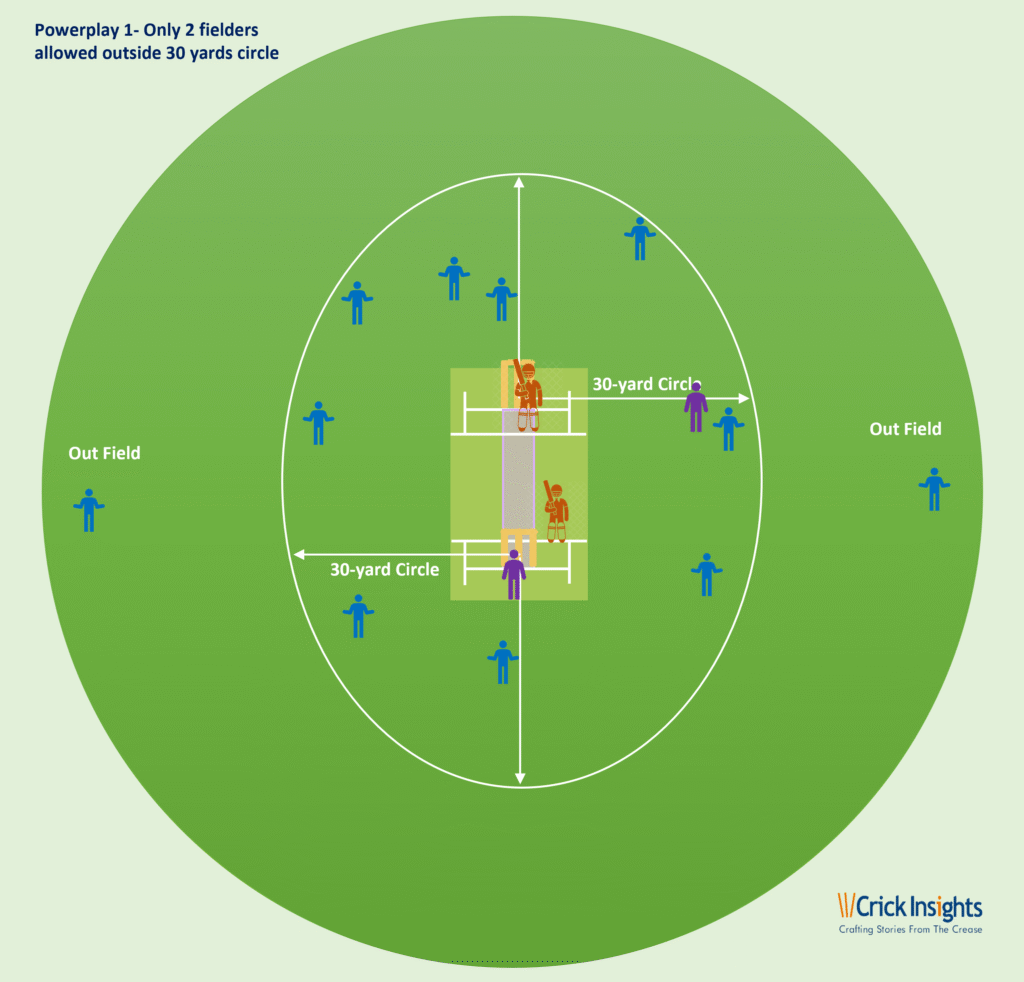
Powerplay is a specific period in a cricket match when fielding restrictions are applied, allowing batsmen to score runs more easily.
During powerplay:
✔ fewer fielders allowed outside the inner circle
✔ batsmen can play attacking shots
✔ run scoring becomes easier
👉 Powerplay is designed to make the game more exciting and aggressive.
Why Is Powerplay Important?
Powerplay is important because:
✔ it helps teams score quick runs
✔ it can change match momentum
✔ it forces bowlers to bowl carefully
✔ it encourages attacking cricket
Many matches are influenced by how teams perform during powerplay overs.
Powerplay Rules in Different Formats
Powerplay rules vary depending on the format of cricket.
🟢 Powerplay in ODI Cricket (50 Overs)
In One Day Internationals, there are three powerplay phases.
🟡 Powerplay 1 (Overs 1–10)
Only 2 fielders allowed outside the 30-yard circle
Mandatory powerplay
Best time for aggressive batting
Only 2 fielders allowed outside the 30-yard circle
Mandatory powerplay
Best time for aggressive batting
🟡 Powerplay 2 (Overs 11–40)
Up to 4 fielders allowed outside the circle
Fielding restrictions relaxed
Up to 4 fielders allowed outside the circle
Fielding restrictions relaxed
🟡 Powerplay 3 (Overs 41–50)
Up to 5 fielders allowed outside the circle
Used for final acceleration
Up to 5 fielders allowed outside the circle
Used for final acceleration
🟢 Powerplay in T20 Cricket
In T20 matches:
🟡 Powerplay Overs (Overs 1–6)
Only 2 fielders allowed outside the circle
Very aggressive batting phase
High risk, high reward
Only 2 fielders allowed outside the circle
Very aggressive batting phase
High risk, high reward
👉 T20 cricket has only one powerplay period.
🟢 Powerplay in Test Cricket
❌ There is no powerplay in Test cricket.
Test matches:
✔ have no fielding restrictions
✔ focus on patience and skill
✔ follow traditional field placements
How Teams Use Powerplay Smartly
🏏 Batting Team Strategy
✔ openers play attacking shots
✔ try to score maximum runs
✔ take calculated risks
🎯 Bowling Team Strategy
✔ bowl tight line & length
✔ aim for early wickets
✔ control runs despite restrictions
A strong powerplay performance can shape the entire match.
Powerplay vs Normal Overs
| Powerplay Overs | Normal Overs |
|---|---|
| Fielding restrictions | Fewer restrictions |
| Faster scoring | Controlled scoring |
| More boundaries | Balanced play |
| Aggressive batting | Strategic batting |
Why Powerplay Confuses Beginners
Beginners often get confused because:
❌ rules differ by format
❌ fielding restrictions change
❌ overs vary in each format
Once you know the basics, powerplay becomes easy to understand.
Can Powerplay Decide a Match?
Yes — especially in:
✔ T20 matches
✔ high run chases
✔ strong opening partnerships
A powerful start often builds winning momentum.
Frequently Asked Questions
❓ How many powerplay overs are there in T20?
There are 6 powerplay overs.
❓ Is powerplay compulsory?
Yes, the first powerplay is mandatory.
❓ Why is powerplay important for openers?
Fielding restrictions allow easier scoring opportunities.
Beginner Question 👇
Do you enjoy aggressive powerplay batting or tight powerplay bowling more?
cricket rules explained simply for beginners
Fast scoring during powerplay increases strike rate in cricket
Risky shots during powerplay lead to dismissals explained in ways a batsman can get out in cricket.
What Is Economy Rate in Cricket
What Is Bowling Strike Rate in Cricket?
No comments:
Post a Comment