What Is Batting Average in Cricket? (Explained Simply for Beginners)

When you watch cricket or check player statistics, you often hear:
👉 “He has a good batting average.”
But what does batting average actually mean?
In this guide, you’ll learn what batting average is, how it is calculated, and why it is important — explained in very simple language for beginners.
👉 If you’re new to cricket, first read Cricket Rules Explained Simply for Beginners to understand the basics.
What Is Batting Average in Cricket? (Simple Meaning)
Batting average shows:
👉 how many runs a batsman scores on average before getting out.
In simple words:
✔ batting average measures consistency
✔ higher average = more reliable batsman
✔ lower average = gets out more often
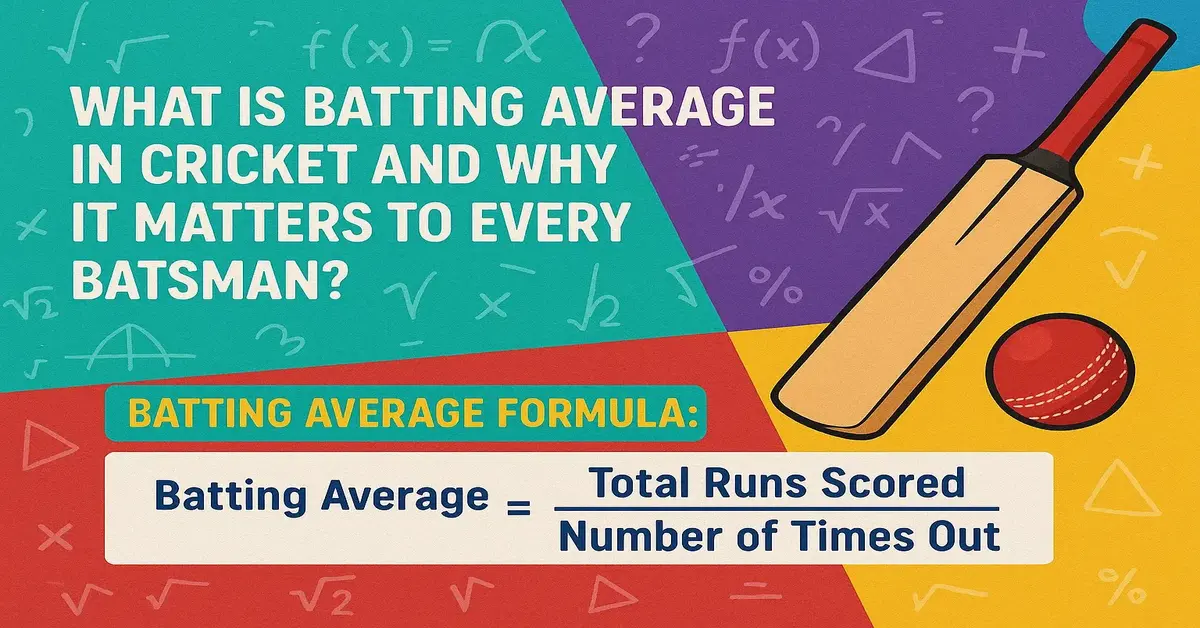
Batting Average Formula (Easy)
Batting Average = Total Runs Scored ÷ Number of Times Out
⚠️ Important:
Not-outs are NOT counted as dismissals.
Batting Average Example (Easy to Understand)
Example 1
Total runs scored = 500
Times out = 10
500 ÷ 10 = 50
👉 Batting average = 50
👉 This is considered very good.
Example 2
Runs scored = 300
Times out = 15
300 ÷ 15 = 20
👉 Batting average = 20
👉 This is below average.
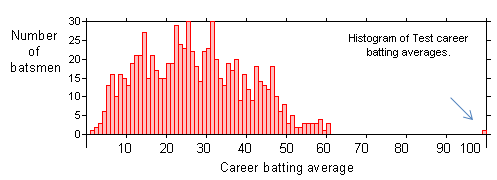
What Is a Good Batting Average?
A good batting average depends on the format.
| Format | Good Batting Average |
|---|---|
| Test Cricket | 40+ |
| ODI Cricket | 35–45 |
| T20 Cricket | 25–35 |
⚠️ In T20 cricket, strike rate is often more important than average.
Why Batting Average Is Important
Batting average shows:
✔ how reliable a batsman is
✔ long-term performance consistency
✔ contribution to team success
Players with high averages are trusted in pressure situations.
Batting Average vs Strike Rate (Common Confusion)
Many beginners confuse batting average with strike rate.
| Batting Average | Strike Rate |
|---|---|
| Shows consistency | Shows scoring speed |
| Runs per dismissal | Runs per 100 balls |
| Important in Tests | Important in T20 |
👉 Learn more in What Is Strike Rate in Cricket?
The best players balance both.
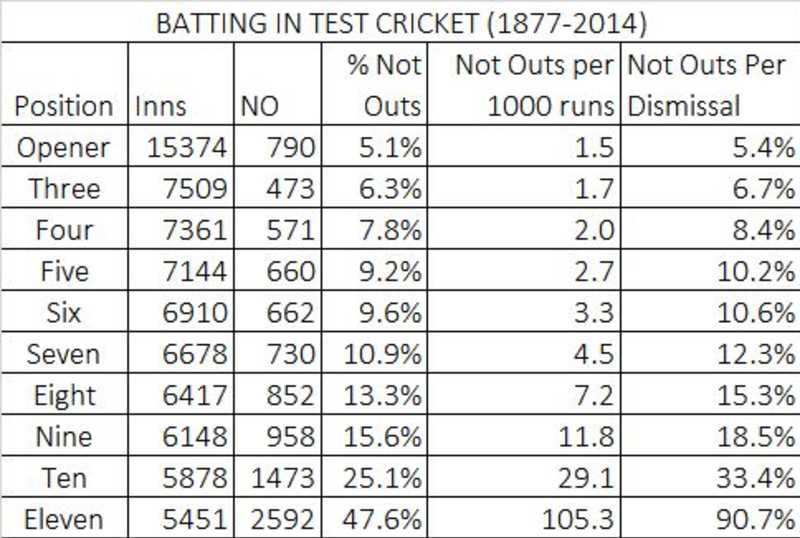
Does Not Out Increase Batting Average?
Yes ✅
When a batsman is not out:
✔ runs are added
✔ dismissal is not counted
This increases the batting average.
👉 That’s why finishers often have high averages.
Is Batting Average Important in T20 Cricket?
Batting average is less important in T20 cricket because:
✔ matches are short
✔ fast scoring matters more
✔ strike rate is crucial
However, average still shows basic reliability.
Batting Average in Tournaments
Batting average is calculated:
✔ over multiple matches
✔ using total runs scored
✔ divided by times out
This allows fair comparison between players.
Why Batting Average Confuses Beginners
Beginners get confused because:
❌ not-outs affect average
❌ different formats have different standards
❌ average does not show scoring speed
Once you understand dismissals, batting average becomes easy.
Can Batting Average Decide Player Value?
Yes — especially in:
✔ Test cricket
✔ long innings formats
✔ consistent team selection
Players with strong averages are seen as dependable performers.
Final Summary (Beginner Friendly)
✔ batting average shows consistency
✔ higher average = more reliable batsman
✔ not-outs increase average
✔ average + strike rate show real quality
Understanding batting average helps you judge players better and enjoy cricket statistics.
Frequently Asked Questions
❓ Is a batting average of 50 good?
Yes. It is excellent in any format.
❓ Does batting average matter in T20?
Yes, but strike rate matters more.
❓ Who usually has higher averages?
Top-order batsmen and finishers.
Beginner Question 👇
Do you prefer a batsman with high average or high strike rate?
If you are new to cricket, first read our guide on cricket rules explained simply for beginners to understand the basics.
No comments:
Post a Comment